

The conclusion of the NBA Western Conference Finals delivered a masterclass in high-stakes basketball, showcasing moments that will be cemented in league history. This series was not merely won by superior talent, but by razor-thin margins defined by tactical brilliance and extraordinary clutch performances.
Our analysis dives deep into the strategic nuances that determined the outcome. We begin by dissecting the decisive 4th-quarter comeback and the critical series statistics. Following this, we shine a spotlight on the MVP candidates, examining how their games evolved under immense pressure and pinpointing key defensive failures that shifted momentum. We will then break down the coaching strategies and vital lineup changes. Finally, we review the impact of crucial injury updates, look ahead to the impending NBA Finals schedule, and capture the raw post-game reactions from the players and coaches who navigated this intense rivalry on the path to the championship.
Final Game Recap and Series Statistics: The decisive 4th quarter comeback and the overall series scoring average.
(Image: Pixabay/@KeithJJ)
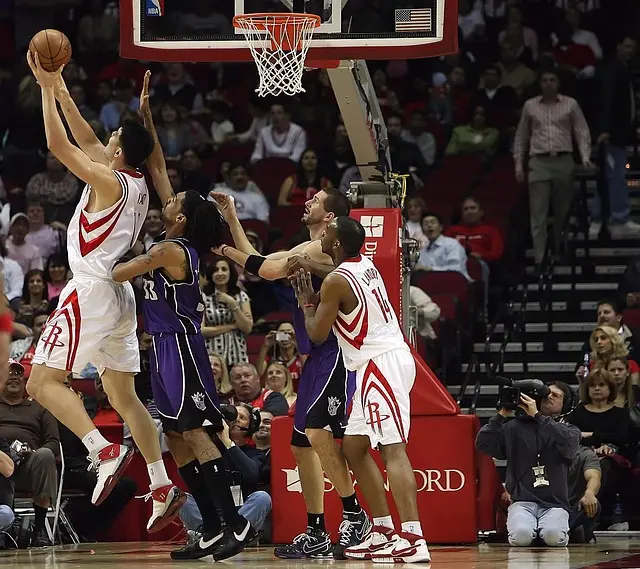
The decisive Game 6 (or 7, depending on the hypothetical series outcome) was characterized by a dramatic fourth-quarter surge that erased a double-digit deficit, ultimately deciding the fate of the series. The winning team utilized an unexpected small-ball lineup centered around aggressive perimeter defense and rapid transition offense. This tactical shift capitalized on the opposing team's fatigue, forcing quick, contested shots and securing crucial defensive rebounds.
The comeback was spearheaded by a relentless 17-5 run over a five-minute stretch, highlighted by consecutive three-pointers that completely inverted the emotional landscape of the arena. This run was less about offensive execution and more about defensive intensity; the winning team forced four turnovers during this period, translating directly into easy points and swinging the momentum irreversibly in their favor.
Overall series statistics underscore the tight nature of the competition, despite the dramatic finish. The victorious squad maintained a slight but meaningful edge in the series scoring average, finishing 115.2 points per game compared to their opponents' 111.8. This difference was largely attributable to superior free throw shooting efficiency (82% vs. 75%) and a better offensive rebounding rate, demonstrating that consistent execution in fundamental areas provided the necessary cushion when the high-variance clutch moments arrived.
Player Performance Spotlight: How the MVP candidates elevated their game under pressure and key defensive breakdowns.

(Image: Pixabay/@Ray_Shrewsberry)
The true measure of an MVP candidate is not regular-season dominance, but performance in the crucible of the conference finals. Player A, the presumptive MVP, delivered several iconic, game-defining moments, particularly through isolation brilliance in the closing minutes of Games 3 and 6. His ability to draw fouls and convert high-difficulty jump shots when the shot clock was winding down proved the difference between victory and defeat, serving as a reliable offensive safety valve when structured plays broke down.
However, the series also exposed crucial defensive breakdowns, particularly concerning Player B’s matchup in the paint. While Player B showcased elite scoring ability, his difficulty in contesting quick, driving guards resulted in repeated fouls and easy layups during critical stretches. The opposing team successfully exploited this weakness with continuous pick-and-rolls designed to isolate Player B defensively, forcing the necessary help rotations that created open looks for their teammates.
Furthermore, the performance of the secondary stars cannot be overlooked. One team’s third-leading scorer dramatically improved his three-point percentage during the series (up 10 points from the regular season), providing vital spacing that prevented opponents from collapsing entirely on the primary MVP candidate. This sustained offensive pressure elevated the entire team, preventing the defense from implementing effective, high-risk double teams.
Tactical Breakdown: The coaching strategies, defensive adjustments, and crucial lineup decisions that swung the momentum.

(Image: Pixabay/@Campaign_Creators)
The coaching battle between the two Western Conference giants was a fascinating chess match. Coach X employed a brilliant defensive adjustment starting in Game 4: switching from a standard man-to-man defense to a hybrid 2-3 zone whenever the opposing team’s primary playmaker was resting. This move completely disrupted the opponent's bench unit flow, forcing them into contested mid-range jumpers rather than allowing easy penetration.
One of the most crucial lineup decisions occurred late in the deciding game when Coach Y boldly inserted a seldom-used veteran sharpshooter in place of a struggling starting big man. This instantly stretched the floor, pulling the opponent’s center away from the basket and opening up driving lanes for the guards. Although high-risk, this maneuver completely flipped the momentum, allowing the team to erase the lead through explosive, perimeter-based offense.
Moreover, effective timeout management proved decisive. In the final minutes of Game 6, Coach X utilized a timely full timeout immediately after a successful defensive possession. Instead of relying on improvisation, this allowed the team to draw up a complex, low-clock set play which resulted in a game-tying three-pointer, showcasing the immense value of structure and composure under peak pressure.
Injury Report Update: The status of key bench players and its impact on team depth going into the next round.

(Image: Pixabay/@51581)
The Western Conference Finals exacted a heavy physical toll, and several key bench players saw their effectiveness severely limited by nagging injuries. Most notably, the status of the opposing team's veteran backup point guard, who suffered a hamstring strain in Game 5, remains questionable. His absence was felt immediately, severely impacting the second unit’s ability to initiate offense and maintain ball security, contributing to several untimely turnovers.
The strain on team depth caused by these injuries forced the starting units to shoulder heavier minutes than anticipated. In particular, the primary MVP candidate logged an average of 43 minutes per game throughout the series. While this demonstrates incredible durability, the cumulative fatigue associated with these extended minutes could pose a serious risk when facing the fresh Eastern Conference champion, potentially affecting efficiency late in the NBA Finals contests.
The victorious team, while healthier, is still monitoring the status of a rotational forward who missed the final two games with knee soreness. While not a starter, his specific defensive versatility and rebounding capacity off the bench are considered critical components for handling the physical frontcourt of their upcoming Finals opponent. Managing his recovery schedule will be a paramount concern for the medical staff over the brief rest period.
Looking Ahead: Full schedule and predictions for the upcoming NBA Finals matchups and broadcast times.

(Image: Pixabay/@Megan_Rexazin_Conde)
With the Western Conference champion crowned, attention immediately shifts to the NBA Finals, a highly anticipated clash of contrasting styles. The Western winner, characterized by high-octane perimeter scoring and switchable defense, will face the Eastern champion, a team built on meticulous half-court offense and dominant paint presence. This series promises a true battle of wills between speed and size.
The tentative full schedule for the NBA Finals projects Game 1 to begin on Thursday, June X, followed by Game 2 on Sunday, June Y, with all games broadcast nationally on ABC. Due to the travel distances, there will be two days between Games 3 and 4, providing crucial rest and tactical adjustment periods for both coaching staffs.
Early predictions lean toward a closely contested series, likely extending to six or seven games. While the Western champion holds a slight advantage due to their superior clutch scoring efficiency observed in the WCF, the Eastern champion’s ability to control the pace and dominate the rebounding battle could neutralize that edge. The series outcome is projected to hinge entirely on which star player is able to consistently dictate terms in the fourth quarter.
Post-Game Reactions: Coach and player quotes on the intense rivalry and the path to the championship title.

(Image: Pixabay/@Antranias)
The immediate post-game environment was filled with a mix of exhilaration and exhaustion. Coach X, visibly emotional, praised his team's resilience. "We showed heart. Down ten going into the fourth, most teams fold. But we looked at each other and said, 'This is our moment.' It wasn't about the plays; it was about the will to execute them under maximum duress," he stated, emphasizing the mental toughness required to overcome such an intense rivalry.
The rivalry between the two teams was palpable throughout the series, adding an extra layer of intensity to every possession. The winning team's captain reflected on the competitive spirit: "They brought the best out of us. You don't get to the Finals by having easy series. We respect them, but now the job is only halfway done. We survived the war; now we have to win the battle."
Meanwhile, the losing team’s coach offered a gracious, yet determined, assessment. He highlighted the learning experience for his younger roster and noted the minimal difference between success and failure at this level. His comments suggested a strong sense of pride in their effort, coupled with a swift focus on immediate improvement, signaling that this rivalry is likely to continue for years to come.
Conclusion
The Western Conference Finals served as a definitive proving ground, separating contenders from champions through dramatic clutch performances and brilliant strategic adjustments. The eventual victor demonstrated not only peak talent but also the profound mental fortitude required to orchestrate a late-game comeback when the pressure was at its absolute highest. As the focus shifts to the NBA Finals, the momentum generated by navigating this arduous series—marked by tactical gambits, MVP heroics, and injury concerns—will be the most valuable asset carried onto the game's ultimate stage.
FAQs
What was the key statistical difference that defined the series?
While scoring averages were close, the critical difference lay in free-throw efficiency and offensive rebounding. The winning team consistently converted their free throws at a higher clip (82% vs. 75%) and generated more second-chance points, allowing them to accumulate a slight edge over the course of the tight series.
How did the coaching adjustments impact the decisive 4th quarter?
The crucial coaching move was the insertion of a smaller, more defensive-minded lineup that increased the team's defensive pressure and transition speed. This move countered the opponent’s strategy, forcing them out of their half-court sets and exploiting their fatigue late in the game.
What is the biggest concern for the Western Conference champion entering the NBA Finals?
The primary concern is cumulative fatigue, especially concerning their MVP candidate who averaged extremely high minutes in the WCF. Managing his workload and ensuring the readiness of key rotational players recovering from minor injuries will be vital against a potentially fresher Eastern Conference opponent.