

The landscape of global health is experiencing an unprecedented acceleration of scientific discovery, driven by advancements in biotechnology, computational power, and international collaboration. This report provides a technical overview of the most significant recent breakthroughs shaping modern medicine and public health policy. We will examine critical developments ranging from mRNA vaccine platform iterations and novel oncology treatments to the expansion of personalized medicine and strategies for mitigating emerging pathogens.
Understanding these technical developments is crucial for healthcare practitioners, policymakers, and the public alike. The following sections detail current initiatives in public health, revolutionary findings in cancer research, therapeutic progress in mental health, critical updates in nutritional science, the expanding role of genomic sequencing, and the global efforts dedicated to tracking and preventing infectious disease outbreaks.
Latest updates on vaccine development and public health initiatives.
(Image: Pixabay/@faespencer)
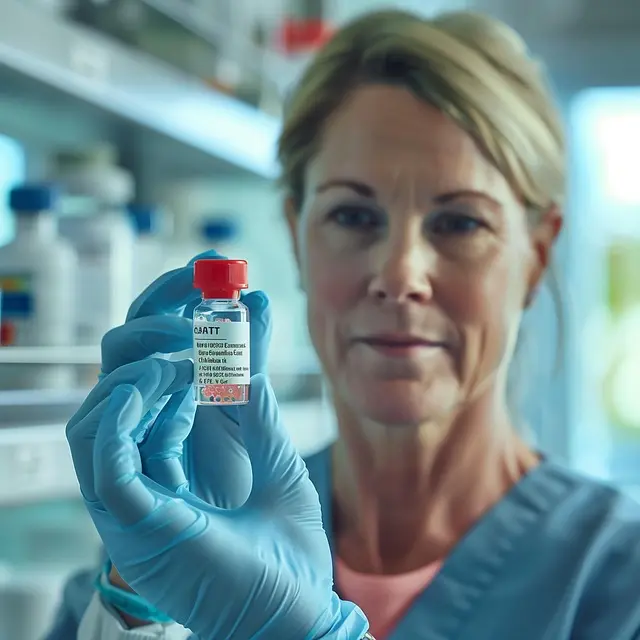
Contemporary vaccine development has pivoted significantly toward platform technologies, most notably leveraging self-amplifying mRNA (saRNA) and sophisticated viral vectors. These advancements allow for rapid antigen design and deployment, dramatically shortening the timeline between pathogen identification and clinical trial initiation. Furthermore, enhanced understanding of innate immune response modulation is leading to the implementation of more potent, targeted adjuvant systems to increase vaccine efficacy across diverse demographics.
Public health initiatives are increasingly centered on integrating genomic surveillance into routine monitoring, particularly concerning pathogens exhibiting high mutation rates or zoonotic potential. This molecular epidemiology provides high-resolution insights necessary for tailored containment strategies and resource allocation.
Concurrently, efforts are focused on bridging the gap between infectious disease control and the management of non-communicable diseases (NCDs). Large-scale data modeling now informs precision public health interventions aimed at lifestyle modification and optimizing access to chronic disease management resources in underserved populations globally.
Revolutionary cancer research findings and new treatment protocols.

(Image: Pixabay/@u_9p7tw4noz0)
Significant revolutions in oncology center around adoptive cell therapies and targeted immunotherapies. Chimeric Antigen Receptor (CAR) T-cell therapy continues to expand its scope beyond hematologic malignancies, with ongoing trials addressing efficacy in solid tumors through refined targeting strategies, including synthetic Notch (synNotch) receptors and dual-antigen targeting to mitigate tumor heterogeneity and resistance.
Additionally, the development of neoantigen-specific vaccines is pushing personalized medicine boundaries, aiming to prime the patient's immune system against unique tumor mutations that differentiate malignant cells from healthy tissue. These approaches require deep sequencing and bioinformatics analysis to identify optimal therapeutic targets tailored to the individual patient's tumor biology.
Diagnostic protocols are being transformed by non-invasive technologies like liquid biopsies, which analyze circulating tumor DNA (ctDNA) and circulating tumor cells (CTCs). These methods allow for real-time monitoring of treatment response, early detection of minimal residual disease (MRD), and tracking of resistance mechanism evolution, offering a dynamic view of tumor biology far surpassing traditional imaging modalities.
Mental health awareness: current statistics and therapeutic advances.

(Image: Pixabay/@whitesession)
Advances in psychiatric pharmacotherapy are moving away from purely monoaminergic targets toward systems involving neuroinflammation, neuroplasticity, and glutamatergic pathways. Crucially, research into novel rapid-acting antidepressants, particularly compounds derived from ketamine and other NMDA receptor modulators, is showing promise for treatment-resistant depression by inducing rapid synaptic repair.
Furthermore, standardized clinical trials for psychedelic-assisted therapies (e.g., using psilocybin or MDMA) are providing robust data supporting their potential efficacy when administered in structured, supervised, psychotherapeutic settings. These treatments aim to leverage transient shifts in consciousness to facilitate deeper emotional processing and cognitive restructuring.
Mental health diagnostics are benefitting from technological integration through digital phenotyping. This utilizes passively collected data from smartphones and wearable devices—such as sleep patterns, voice cadence, and activity levels—to detect subtle behavioral shifts indicative of mood episodes or symptom relapse. Current statistical models focus on establishing reliable, individualized digital biomarkers to facilitate proactive and personalized intervention strategies, moving toward continuous patient monitoring rather than episodic evaluation.
Nutritional science discoveries: debunking myths and promoting evidence-based diets.

(Image: Pixabay/@Bru-nO)
Modern nutritional science increasingly relies on high-resolution '-omics' technologies, specifically metabolomics and proteomics, to understand the precise biochemical impact of dietary components. Research has significantly shifted focus from isolated macronutrients to the complex interplay of whole dietary patterns and their modulation of the gut microbiome, which acts as a key metabolic organ.
The diversity and function of the intestinal microbiota are now recognized as critical determinants of host metabolism, immunity, and even neurological function via the gut-brain axis. Studies involving fecal microbiota transplantation (FMT) and targeted prebiotics/probiotics are exploring therapeutic applications across various metabolic and inflammatory conditions.
The instructional mandate within contemporary nutritional science emphasizes rigorous, evidence-based dietary guidelines, often debunking popularized myths lacking empirical support. Current guidelines prioritize sustained, balanced eating patterns—such as the Mediterranean or DASH diets—supported by longitudinal cohort studies, demonstrating superior long-term outcomes in managing chronic conditions like cardiovascular disease and Type 2 diabetes compared to supplementation-heavy or highly restrictive protocols.
The role of personalized medicine and genetic sequencing in future healthcare.

(Image: Pixabay/@TyliJura)
Personalized medicine utilizes comprehensive individual biological data, including genomic, transcriptomic, and proteomic profiles, to tailor preventative care and therapeutic interventions. Pharmacogenomic testing, which analyzes how an individual's genetic makeup affects drug response and metabolism via specific cytochrome P450 enzymes, is becoming a standard practice for optimizing dosage and minimizing adverse effects in areas like oncology, psychiatry, and chronic pain management.
The development and refinement of Polygenic Risk Scores (PRS) are revolutionizing predictive health modeling. PRS aggregates the cumulative effect of thousands of common genetic variants to quantify an individual’s susceptibility to common complex diseases, such as coronary artery disease or Type 2 diabetes, often years before clinical manifestation. These scores offer significantly higher predictive power than single-gene tests for complex diseases.
Integrating these predictive scores and pharmacogenomic data into electronic health records allows clinicians to institute highly targeted primary and secondary prevention strategies. For example, individuals identified as high risk for specific conditions can be prioritized for intensive lifestyle intervention or early diagnostic screening, thereby maximizing the impact of limited healthcare resources.
Emerging infectious diseases: tracking and prevention strategies globally.

(Image: Pixabay/@geralt)
Global health security is heavily reliant on enhancing molecular surveillance capabilities and strengthening international reporting mechanisms through networks like the Global Initiative on Sharing All Influenza Data (GISAID) and regional monitoring centers. The primary focus is on diseases with high epidemic or pandemic potential, particularly those originating from zoonotic spillover events at the human-animal interface.
Prevention strategies are increasingly guided by the "One Health" framework, which recognizes the inextricable link between human, animal, and environmental health. This model necessitates interdisciplinary collaboration to monitor wildlife populations, identify environmental drivers of pathogen evolution, and predict, track, and mitigate novel pathogen emergence before widespread transmission occurs.
Response protocols now emphasize bolstering localized laboratory infrastructure and establishing flexible manufacturing capacity for countermeasures, moving toward a "plug-and-play" system for vaccine and therapeutic production. Furthermore, investment in broad-spectrum antiviral and antimicrobial candidates remains a critical component of preparing for unknown biological threats that may resist highly targeted, single-pathogen treatments, ensuring preparedness against diverse microbial threats.Conclusion
The current wave of global health breakthroughs represents a technical paradigm shift toward precision, prevention, and rapid responsiveness. From genomic tailoring of drug therapies to the international mobilization against emerging pathogens, the trajectory of healthcare is becoming increasingly data-driven, individualized, and reliant on cross-sectoral collaboration. Continuous, sustained investment in fundamental research, digital health infrastructure, and equitable access mechanisms is essential to translate these cutting-edge scientific findings into scalable, impactful, and equitable global health outcomes for all populations.