
In an age defined by informational overload, the daily news cycle often presents a fragmented view of global affairs. To move beyond mere consumption and toward genuine understanding, critical synthesis is required. This article outlines the systematic process of decoding the top stories, transforming disparate headlines into a cohesive, meaningful narrative.
We begin by scrutinizing the information architecture employed by the world's leading news agencies, revealing how presentation shapes perception. Following this structural analysis, we delve into geopolitical flashpoints, comparing the varying perspectives used to frame international conflicts. Our scope then shifts to global economics, contrasting expert forecasts and identifying consensus trends. Finally, we examine the forward-looking coverage of emerging technology and ethics, before detailing The 'Verity Tide' synthesis method—our approach to narrative construction—and demonstrating how to translate complex international events into local relevance for the conscientious reader.
Identifying the information architecture: How the biggest news portals structure their coverage.
(Image: Pixabay/@geralt)
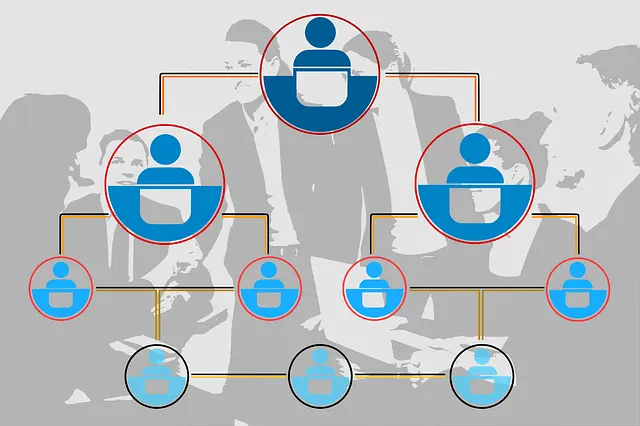
The structure and categorization employed by major news portals are not arbitrary; they reflect underlying editorial priorities and strategic commercial decisions designed to maximize reach and attention. Most global outlets adhere to a familiar taxonomy—World, Business, Politics, Technology—but the subtle placement and prominence of stories within these silos are highly revealing. For instance, classifying a major domestic policy shift under the 'Global Economy' rather than 'National Politics' inherently broadens its perceived scope and impact, signaling its importance to international investors.
Analyzing this architecture requires observing the digital hierarchy. The elements appearing "above the fold" or prioritized in mobile notifications are often deemed the most urgent or significant, reflecting the outlet's immediate assessment of the daily global narrative. Furthermore, the interconnectivity—how links direct readers from a geopolitical conflict story to a corresponding business or energy analysis—demonstrates the portal's attempt to build thematic cohesion, even if the primary goal is maximizing session depth rather than holistic comprehension.
Understanding these structural choices is the first step in decoding the news. It allows the reader to distinguish between editorially amplified narratives and stories that are substantively important but strategically downplayed. This framework provides the essential context for how information is curated before it even reaches the consumer.
Geopolitical flashpoints: Analyzing consensus and divergence in reports on current international conflicts.

(Image: Pixabay/@stokpic)
When analyzing coverage of ongoing international conflicts, a fundamental consensus typically exists around verifiable facts: the dates of events, casualty counts (when confirmed by neutral bodies), and official diplomatic statements. However, true insight lies in analyzing the points of divergence, particularly regarding causality, terminology, and perceived culpability. Reports emanating from different geographical regions or those supported by various state actors often employ distinct linguistic frameworks to describe the same event, subtly shaping public opinion toward one side or the other.
The divergence is most apparent in the emphasis placed on humanitarian aspects versus strategic political goals. One major news desk might lead with the devastating effect on civilian infrastructure, focusing on the human cost, while another might prioritize the analysis of military strategy and diplomatic maneuvering. This contrast underscores the ideological lens through which complex conflicts are filtered, emphasizing the necessity of cross-referencing sources to construct a balanced understanding of the events on the ground.
Therefore, successful synthesis means moving beyond the immediacy of the conflict reporting itself and assessing the underlying narrative drivers. Identifying which actors are consistently given voice, which economic impacts are highlighted, and which historical context is provided or omitted is crucial for decoding the true geopolitical implications of any flashpoint.
The global economic outlook: Comparing forecasts and data presentations from major financial news desks.

(Image: Pixabay/@Mohamed_hassan)
The coverage of the global economy is characterized by a reliance on complex, often proprietary, forecasting models. Major financial news desks—whether drawing from central bank projections, investment firm analyses, or intergovernmental organization reports—frequently present projections that, while based on the same core data (e.g., inflation rates, employment figures, GDP growth), lead to starkly different conclusions regarding future stability or growth. This divergence often hinges on the weight assigned to specific variables, such as geopolitical risk, energy prices, or consumer confidence.
A critical component of economic synthesis is comparing these forecasts to identify the dominant market sentiment. For example, a comparison of reports from the International Monetary Fund (IMF) and a leading private sector bank might reveal a shared concern regarding sovereign debt, yet wildly differing outlooks on the resilience of emerging markets. This comparison highlights key fault lines in global financial thinking: optimism driven by technological innovation versus caution stemming from persistent inflation pressures.
Furthermore, the visual presentation of economic data requires careful scrutiny. Graphical representations can easily emphasize steep trends or mitigate mild fluctuations based on axis scaling and data aggregation. Our synthesis method focuses on verifying the underlying data sets and normalizing the metrics to ensure that comparative forecasts are evaluated based on their quantitative rigor rather than their persuasive presentation.
Emerging technology and ethical debates: Where global reporting is focusing its future coverage.
(Image: Pixabay/@geralt)
Reporting on emerging technology has rapidly evolved from chronicling breakthroughs to rigorously debating their societal and ethical consequences. Today, the focus is less on 'what technology can do' and more on 'what technology should be permitted to do.' Central to this discussion are issues surrounding Artificial Intelligence governance, digital privacy, deepfake proliferation, and the environmental impact of large-scale computational infrastructure.
Global reporting is increasingly centered on the formation of regulatory frameworks. The coverage often compares contrasting approaches—such as the European Union’s emphasis on precautionary principle and ethical boundaries (as seen in the AI Act), versus the generally more permissive, innovation-driven regulatory stance observed in parts of the United States and Asia. These differing national strategies create friction points that define the future global standards for data sovereignty and technological deployment.
This category of coverage acts as a predictive index, signaling where future capital investment and legislative action will be concentrated. Synthesis in this domain involves mapping the intersections between technological advancement and human rights, ensuring that the focus remains on accountability and the long-term sustainability of digital societal structures.
The 'Verity Tide' synthesis method: Rearranging disparate headlines into cohesive narrative threads.

(Image: Pixabay/@ua_Bob_Dmyt_ua)
The 'Verity Tide' synthesis method is designed to counteract the fragmentation inherent in daily news consumption. We treat global headlines not as isolated events, but as symptomatic expressions of deeper, ongoing macro-narratives. This methodology involves triangulating information across diverse beats—for example, linking an environmental treaty negotiation (Environment section) with commodity price volatility (Business section) and subsequent civil unrest (Politics section)—to identify the underlying, unifying forces at play, such as resource scarcity or systemic climate pressure.
Our process begins with source verification and data cleansing, ensuring that only information corroborated across multiple, ideologically distinct sources is retained. We then utilize pattern recognition software and expert human analysis to cluster events thematically, revealing the continuous thread that connects seemingly unrelated international developments. This clustering allows us to elevate the discussion from 'what happened today' to 'what trend is accelerating globally.'
By restructuring the news around these narrative threads, readers gain a more profound understanding of complex global dynamics. Instead of consuming a dozen unrelated facts, they receive a cohesive analysis illustrating how, for example, a supply chain bottleneck in Southeast Asia directly impacts political stability in a Western nation through localized inflationary pressure.
From international events to local impact: Translating global news relevance for the reader.

(Image: Pixabay/@RoadLight)
A central objective of effective global synthesis is demonstrating the immediate, tangible relevance of international events to the local reader. While distant conflicts or complex diplomatic negotiations may seem abstract, their consequences manifest daily in local economies, policies, and community dynamics. The challenge is illustrating this causal chain clearly and concisely.
This translation involves drawing direct lines of consequence. For instance, explaining that a sudden shift in monetary policy by the European Central Bank may tighten local credit availability for small businesses, or that decisions made at a World Health Organization summit directly inform local public health protocols. By focusing on the flow of money, goods, policy, and migration, we connect the macro level to the micro experience.
The final step in our synthesis is contextualizing the news in terms of actionable knowledge. Understanding that a global economic downturn will depress local housing markets, for example, provides the reader with foresight and the ability to make informed decisions, moving them from being passive observers of global chaos to active participants aware of how planetary forces shape their immediate environment.
Conclusion
Navigating the complexity of the modern media environment requires more than simple diligence; it demands a structured, critical approach to information synthesis. By scrutinizing the architecture of news portals, comparing divergent geopolitical and economic narratives, and tracking the ethical dimensions of technological advance, we move closer to a holistic understanding of the world.
The 'Verity Tide' method is dedicated to constructing these cohesive narrative threads, ensuring that our readers are equipped not just with facts, but with the context necessary to decode the top stories shaping our future. The ultimate value of this synthesis lies in its ability to translate distant global events into immediate, actionable knowledge, affirming that every international decision has a local resonance.