

The global geopolitical landscape has been profoundly reshaped by recent assertive actions and declarative statements emanating from former President Donald Trump and his administration. These maneuvers signal a significant shift toward a more aggressive, unilateral assertion of American power across key strategic regions, particularly the Western Hemisphere and the Middle East.
The catalyst for this renewed tension was the high-profile US-supported capture of Venezuelan leader Nicolás Maduro, an event immediately followed by Trump's bold articulation of a revised American doctrine emphasizing absolute hegemony in the region. This assertive posture has generated diplomatic friction with allies and adversaries alike, from challenging territorial sovereignty in Greenland and straining relations with Colombia to issuing stark warnings to Cuba and Iran. This article dissects these critical global warnings and the doctrine of dominance they underpin.
The US Capture of Nicolás Maduro and the New Doctrine of American Dominance

(Image: Pixabay/@kalhh)
The operation leading to the arrest of Nicolás Maduro was heralded by the Trump administration as a decisive victory for democracy and a powerful demonstration of US resolve. The capture, executed through coordinated international efforts and intelligence sharing, was explicitly framed as the removal of a corrupt, anti-democratic regime that threatened regional stability and US security interests. This action was not merely punitive but foundational, establishing a precedent for American intervention in sovereign nations deemed hostile to Washington's objectives.
Following the capture, Trump immediately declared a new doctrine of American dominance in the Western Hemisphere. This doctrine posits that the United States reserves the right to intervene—diplomatically, economically, or militarily—wherever threats to democratic stability or American interests arise. This formal assertion rejects any notion of shared regional leadership and strongly challenges the long-standing principle of non-intervention, effectively claiming the entire hemisphere as a zone where US authority is paramount and non-negotiable.
This aggressive declaration marks a calculated return to a more muscular foreign policy, aimed at dismantling authoritarian regimes and signaling to nations like Nicaragua and Cuba that their alignment with adversarial global powers will no longer be tolerated. The new doctrine serves as a warning that US patience for regional instability has expired, replacing nuanced diplomatic engagement with a clear ultimatum regarding political alignment.
Geopolitical Tension over Greenland

(Image: Pixabay/@Visualityswiss)
In a move that surprised international observers, the Trump administration leveraged "national security" concerns to pressure Denmark regarding the future of Greenland. The US asserted that the Arctic territory, rich in strategic minerals and vital for controlling burgeoning polar shipping lanes, was increasingly threatened by the presence of "Russian and Chinese ships" engaged in surveillance and resource exploration. These claims suggested that Greenland’s current governance was insufficient to protect Western security interests in the critical Arctic domain.
These US claims, however, met firm rejection from both Greenland's political leadership and the government of Denmark. Greenland's Prime Minister emphasized the territory’s autonomous decision-making capacity and strongly rejected the narrative that the US needed to establish a greater security presence, viewing the statements as an unacceptable infringement on their internal affairs. They insisted on managing their own security relationships and upholding their environmental commitments without external, heavy-handed interference.
Denmark further complicated the situation by confirming its sovereignty and control over Greenland’s defense and foreign policy. The dispute highlights the growing friction over Arctic resources and strategic positioning, demonstrating Washington's willingness to challenge the territorial arrangements of close allies when perceived security risks—especially those involving Russia and China—are at stake.
The Strained Relationship with Colombia

(Image: Pixabay/@deeznutz1)
Relations with Colombia, a traditionally strong US partner, became acutely strained under the shadow of Trump's global dominance strategy. Former President Trump launched stinging public accusations against current Colombian President Gustavo Petro, directly linking his administration to pervasive drug trafficking operations. These accusations were highly destabilizing, suggesting a fundamental lack of trust in Bogota's commitment to counter-narcotics efforts and threatening the extensive bilateral security cooperation that has defined the relationship for decades.
The rhetoric escalated dramatically when Trump suggested the potential for US military intervention in Colombia. While vague, the threat was tied to resolving the narcotics crisis if the Colombian government failed to meet stringent US demands for eradication and interdiction. Such a suggestion, even rhetorical, violates the foundational principles of sovereignty and non-interference enshrined in inter-American treaties, causing outrage within Petro’s administration and throughout Latin American capitals.
This highly confrontational approach forces Colombia into a precarious position, balancing its need for continued security aid with the defense of its national dignity and sovereignty against powerful external pressure. The situation underscores how the new US doctrine views even cooperative partners through a transactional lens, willing to deploy aggressive threats to ensure compliance with Washington’s specific strategic priorities.
Cuba Under Pressure
(Image: Pixabay/@WikimediaImages)
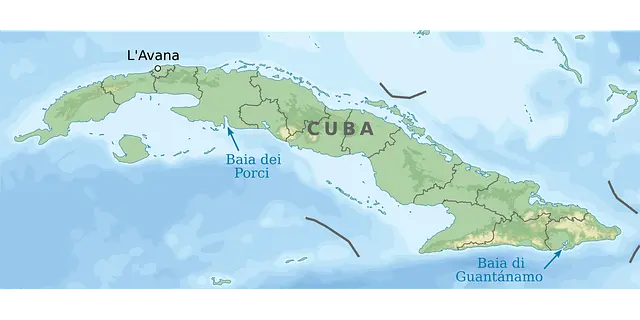
Cuba has been identified by the Trump administration as a regime whose time is rapidly expiring, largely due to intensifying economic pressures. Trump assessed that the island nation is "ready to fall" now that its primary lifeline—heavily subsidized Venezuelan oil income—has been drastically curtailed or eliminated following the political and economic collapse in Caracas. This loss of economic support exacerbates existing shortages, fueling internal discontent and potentially destabilizing the communist government.
This assessment is reinforced by figures like former Secretary of State Marco Rubio, who have issued repeated public warnings regarding the regime’s fragility. They argue that the US must maintain maximum economic pressure and diplomatic isolation to prevent any opportunity for the Cuban government to regain stability or secure new patrons. The goal is to utilize economic privation as the key lever for irreversible political change.
The heightened pressure on Cuba is a direct extension of the new doctrine of American dominance, aiming to consolidate the Western Hemisphere under wholly democratic and market-oriented governance. Washington views a post-Maduro Cuba as the next logical target for regime change, believing that the external economic scaffolding necessary to support the communist government has now been irrevocably removed.
Mexico's Firm Rejection of Intervention

(Image: Pixabay/@geralt)
In response to the aggressive posturing regarding Venezuela and the broader Western Hemisphere, Mexican President Claudia Sheinbaum delivered a firm rejection of US interventionism. She explicitly stated Mexico’s commitment to the principle of self-determination and non-interference in the affairs of sovereign nations, publicly opposing any potential US military action or diplomatic meddling in Venezuela. This stance placed Mexico directly in opposition to the new doctrine being promulgated by Washington.
Furthermore, President Sheinbaum has consistently maintained a hardline against the notion of US military assistance or direct intervention to combat powerful drug cartels operating within Mexico. Despite the immense challenge posed by organized crime, Mexico insists that security operations must remain a purely domestic matter, rejecting any suggestion that US troops or specialized forces should operate unilaterally on Mexican soil, thereby protecting national sovereignty.
Mexico’s stance serves as a crucial counter-balance to the US push for regional hegemony. By publicly and firmly rejecting the interventionist mindset, Mexico is attempting to rally support for a principle-based approach to international relations within Latin America, pushing back against the increasing trend of unilateral security actions dictated by Washington.
The Renewed Threat to Iran
(Image: Pixabay/@geralt)
The aggressive rhetoric was not limited to the Americas; the Trump administration also renewed explicit warnings toward Iran. Addressing ongoing civil unrest and pro-democracy movements within the Islamic Republic, Trump issued a stern warning that the US would respond with a "hard hit"—suggesting severe military action—if the government moved to harm or execute protesters. This move links the US response directly to human rights violations, attempting to leverage internal dissent to influence Tehran’s actions.
This threat is viewed by many analysts as highly credible, given the history of previous US actions against Iran. Reference was specifically made to prior military operations, including high-profile drone strikes and the bombing of facilities suspected of contributing to Iran’s nuclear program. These previous strikes demonstrate a documented willingness to engage in targeted, unilateral military action without broader international consensus.
The renewed hostility places significant pressure on the Iranian regime, forcing it to weigh the costs of brutally suppressing internal opposition against the risk of direct, devastating military confrontation with the United States. This demonstrates that while the focus has been on the Western Hemisphere, the doctrine of aggressive assertion remains fully active in the Middle East, aimed at containing and destabilizing long-standing geopolitical adversaries.
Conclusion
The confluence of the Maduro capture and the subsequent global warnings issued by the Trump administration marks a definitive and aggressive reassertion of American power on the world stage. This posture is defined by a doctrine that prioritizes unilateral action, rejects non-interventionist principles, and aggressively challenges the sovereignty of nations deemed adversarial or unstable.
From the Arctic to the Gulf and across the Middle East, Washington’s message is clear: the geopolitical rules are changing, and the US is prepared to use its full spectrum of economic and military power to enforce its vision of global order. While effective in achieving immediate objectives, this strategy simultaneously heightens global tensions and strains relationships with both allies and adversaries, ushering in an era of unpredictable geopolitical volatility.